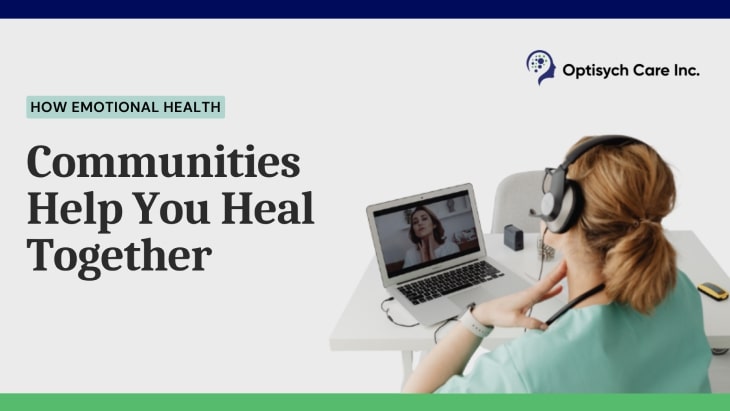
The modern world, characterised by the rapid pace and digitalisation, has turned to emotional health as its major topic. The daily work, relationships, finances, and daily exposure to the world of the Internet are silently eating away at mental and emotional health. There are many stresses, anxieties, loneliness, grief, and emotional burnout, and some people mostly feel that they have to cope with these problems but on their own.
Simultaneously, it is becoming increasingly clear that healing is not always that solitary a process. Individuals are more willing to find purpose and discernment, insight, and experiences as an element of emotional healing. This has caused the emergence of emotional health communities, safe and supportive places where people gather together to recover together. These communities are reinventing access and experience of emotional care with the help of online therapy and virtual therapy.
What Are Emotional Health Communities?
Emotional health communities are organisations that have been planned to support people who have emotional or mental health issues. They are aimed at making them feel a sense of belonging, understanding and support. Within these communities, individuals are able to express themselves freely, hear one another and get to know how to cope positively with emotional hardships.
Emotional health communities are of a number of types. Some consist of face-to-face groups facilitated by a professional or trained facilitator, whereas others are peer-based groups that are founded on common experiences. The online emotional health communities are gaining popularity and are run via online platforms and are often combined with the online therapy services or virtual therapy services.
One should draw the line between support groups and therapy-based communities. Peer connection and understanding are the key areas of support groups, whereas the communities based on therapy are frequently led by mental health specialists and can involve therapeutic interventions. They both are useful and can be used to supplement individual therapy.
The Strength of Healing Collectively
There is a special power that healing brings together which might not be offered by individual efforts. When others share their feelings with people, it gives them a feeling of confirmation and alleviation. The common experiences make people understand that their hardships do not mean that they are weak, and it is a human experience.
Peer connection provides emotional validation that forms a very vital aspect of healing. The experience of being understood decreases the feeling of self-blame and emotional embarrassment. Eventually, this validation contributes to the acceptance, confidence, and emotional development.
The second strong effect of healing together is the minimisation of isolation and loneliness. Suffering of emotions is the kind of thing that flourishes in silence. Emotional health communities overcome that silence by promoting free interaction and mutual healing and make recovery seem less overwhelming and more obtainable.
Developing a Supportive and Safe Environment
An effective emotional health community should be built under a safe and supportive environment. Judging freedom spaces enables people to think and be able to share their thoughts and their feelings without fear of criticism and misunderstanding. Such transparency promotes honesty that is fundamental in emotional recovery.
The major principles in these communities are trust, confidentiality, and mutual respect. The members should be assured that the experiences will stay confidential and be treated with respect. It is this trust which is preserved by clear guidelines and ethical practices.
Professional direction is also a factor. Mental health professionals or moderators make sure that the discussions are healthy, supportive and constructive. Professional control combined with virtual therapy allows the preservation of emotional safety and leads people to positive coping mechanisms.
Emotional Health Community and Support on the Internet
The online emotional health community has grown faster with the development of online technology. Virtual communities enable people in various places and cultures to interact and help each other without geographical restrictions.
These communities have incorporated online therapy and virtual therapy. They provide professional assistance and peer interaction, which is a balanced approach to emotional care. Emotional support is now more accessible than ever through the use of virtual sessions, group discussions and guided activities.
Its main strength is accessibility and flexibility. Individuals who have hectic timetables, physical disabilities or are socially anxious can comfortably conduct their classes in their comfort zone. This diversity guarantees that a more and more diverse population can receive emotional support.
Advantages of Being a Member of Emotional Health Communities
There are many advantages of being a member of emotional health communities. Among the greatest ones, there is better emotional awareness. In hearing the other person and offering personal experiences, one gets more aware of the personal emotions and triggering factors.
Coping skills are also developed by these communities. Members will usually share tips on how to cope with stress, anxiety or emotional difficulties. This learning, with time, builds up emotional resilience and self-confidence.
Perspective is another advantage. Listening to various stories makes people realise that the process of healing is not a straight line. The awareness results in patience, compassion, and hope, which increases long-term emotional well-being.
Who Can Be the Beneficiaries of Emotional Health Communities?
Communities of emotional health are useful to a large group of people. Individuals handling stress and anxiety, grief, relationship problems, or significant life changes are usually comforted and advised by these groups. They are useful as well to people who are overwhelmed or emotionally disconnected.
It can also be beneficial to people that are interested in emotional development and self-exploration. Community emotional health communities will offer reflection, learning and development of the individual.
These communities can provide continuity to those who require emotional support on a continuous basis. They can be used together with online therapy or virtual therapy to offer stable care and adjust to evolving emotional requirements.
Emotional Health Communities vs. Individual Therapy
Individual therapy and emotional health communities have different complementary roles. Individual therapy is a treatment that aims at individual treatment, in-depth emotional analysis, and professional advice depending on the needs of an individual.
Emotional health communities, on the contrary, focus on mutual healing and peer support. They offer communal support and group experience, which individual therapy does not necessarily give.
These methods are very effective when implemented in combination. Online therapy insights are reinforced in communities, whereas therapy assists persons in managing feelings, which develop within groups. Integration of the two usually results in more comprehensive and holistic curing.
How to Select the Appropriate Emotional Health Community
The first step of selecting an appropriate emotional health community is recognition of individual emotional requirements. Recognising what type of support is needed would be beneficial; peer connection or professional guidance or both would valuably reduce the options.
Safety, structure, and facilitation are also to be evaluated. A properly structured society that has well-set rules and trained staff is guaranteed to provide a good experience.
Professional control contributes to credibility and emotional protective measures. Communities related to virtual therapy sites tend to have a better level of care and organised emotional support.
The Future of the Emotional Healing Community
Tolerance of emotional health is gradually growing as the stigma remains on the downward trend. There is increased awareness of the need to deal with emotional well-being in a proactive manner.
Technology will be a major part of the development of emotional health communities. Technological advancements in online therapy and virtual therapy will further personalise, interact and make emotional care more available.
Community-based emotional healing can eventually benefit the general mental health and relationships and make the society more emotionally sensitive in the long run.
Conclusion
The ability to heal collectively is a strong indicator that no one should start their journey to overcome emotional challenges alone. The emotional health communities offer social solidarity, empathy, and strength, which will make the healing process more caring and sustainable. These communities are supported by online therapy and virtual therapy and provide a contemporary, inclusive approach to emotional well-being.
At Optisych Care, we understand the ability of group healing and professional coaching to go hand in hand. When you are in need of a secure and welcoming environment to help your emotional well-being, Contact Optisych Care today and make a serious step toward recovery together.
FAQs:
1. What are emotional health communities?
Emotional health communities are supportive groups where individuals share experiences, offer encouragement, and work toward emotional healing together.
2. How do online therapy and virtual therapy support these communities?
Online therapy and virtual therapy provide professional guidance, structure, and accessibility, enhancing the safety and effectiveness of emotional health communities.
3. Are emotional health communities a replacement for individual therapy?
No, they complement individual therapy by adding peer support and shared healing experiences.
4. Who should consider joining an emotional health community?
Anyone dealing with emotional stress, anxiety, life changes, or seeking personal growth can benefit.
5. How can I get started with emotional health support?
You can begin by exploring trusted platforms like Optisych Care that offer emotional health communities integrated with online therapy and virtual therapy.



Leave a reply